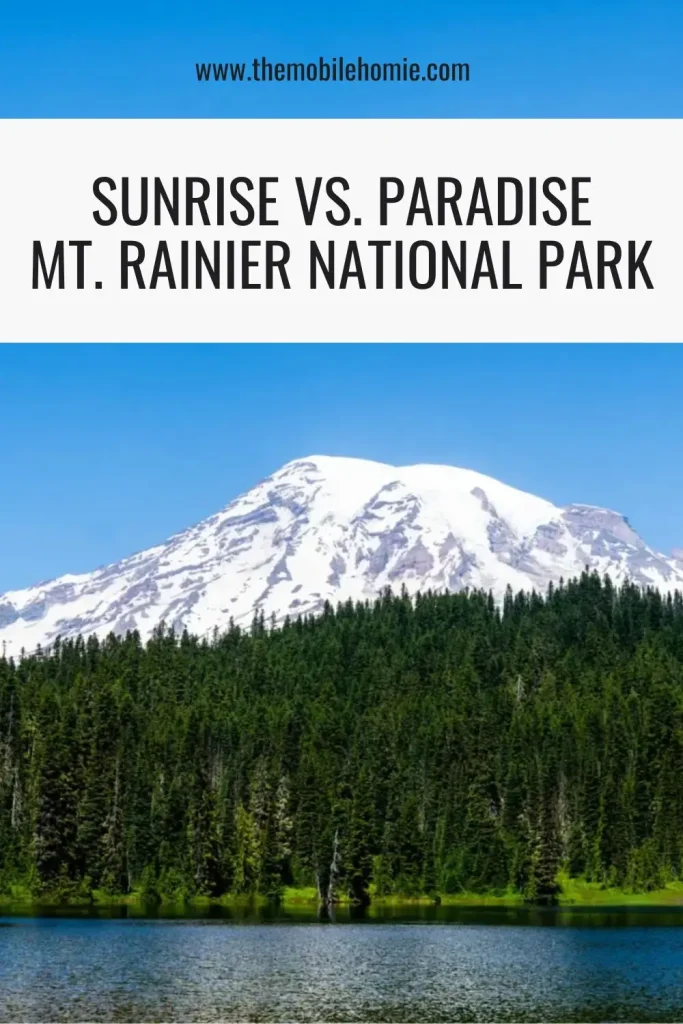
Sunrise or Paradise: Pros and Cons of Each So You Know Which to Visit at Mt. Rainier

The Mobile Homie contains affiliate links and is a participant in the Amazon Services LLC Associates Program, as well as other affiliate programs. If you click on a link or make a purchase through one of these links, we may earn a small commission at no extra cost to you. For more details, see our Privacy Policy.
At 14,000 feet, Mount Rainier looms over everything, but Sunrise and Paradise sit on opposite sides of its shadow. On a short trip, you really do have to choose between them: Sunrise or Paradise?
On our first visit to Mount Rainier National Park, we went to Paradise; on our second, we discovered Sunrise, which, spoiler, is our favorite of the two for its intimacy and wildness. A visit to this area feels like a privilege—an opportunity to experience one of the Pacific Northwest’s most breathtaking natural displays.
Both are spectacular and deliver that jaw-dropping, volcano-looming-above-you feeling. But they offer very different experiences, and if your time is limited, knowing which to choose before you go is essential, especially for first-timers.
Here’s an honest breakdown to help you decide, including an overview of each, in-depth pros and cons, and practical notes for both areas, so you can have a seamless alpine adventure to the highest volcanic peak in the contiguous United States.
The Quick Comparison
| Aspect | Sunrise | Paradise |
|---|---|---|
| Elevation | 6,400 feet | 5,400 feet |
| Season | July-September only | Year-round access |
| Crowds | Moderate | Heavy, especially summer |
| Hiking | Alpine/subalpine terrain | Mix of forest and alpine |
| Wildflowers | Spectacular but brief | Longer season, different varieties |
| Views | Dramatic, close to mountain | Classic postcard angles |
| Facilities | Seasonal visitor center | Year-round visitor center |
| Best For | Serious hikers, wildflower lovers | Families, winter activities |
About Sunrise
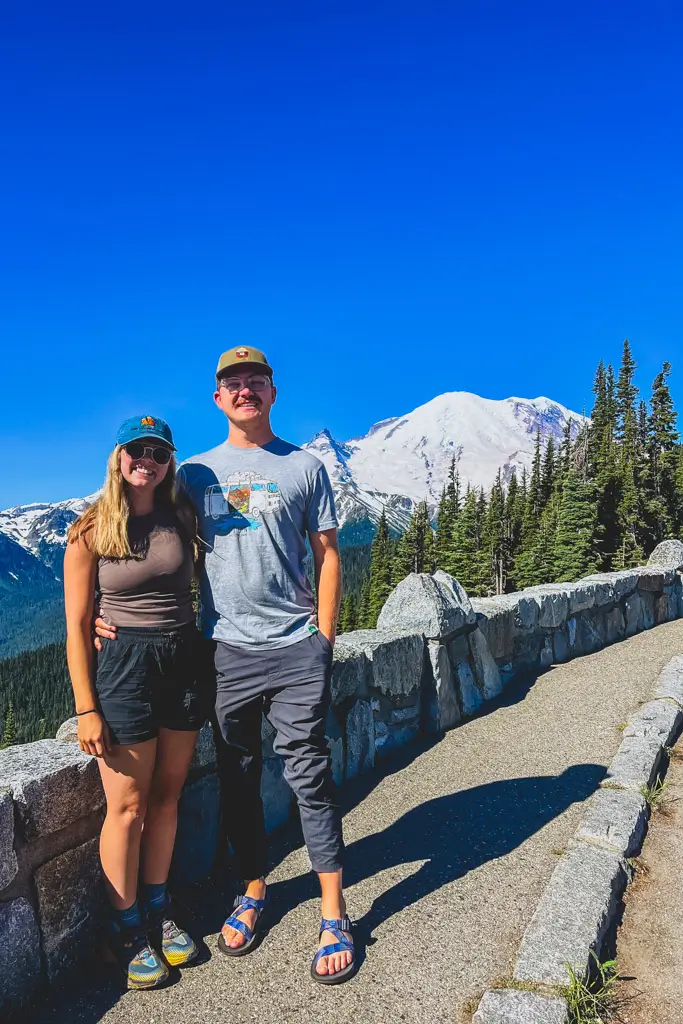
The highest point you can reach by car in Mount Rainier National Park is Sunrise, sitting at 6,400 feet on the Northern side of the volcano.
The name isn’t just fun marketing; it really does catch the first golden light on Rainier’s summit, and the views from up here feel almost surreal.
Because it’s accessible only from early July through mid-September, visiting Sunrise is a special treat, as it’s open for only about 3 months of the year.
The subalpine meadows explode with lupine and Indian paintbrush during peak wildflower season (mid-July through late August), and the alpine terrain gives the whole place a wild, remote feel, even though you can drive right up to it.
Arrive before 7 AM, and you’ll beat the crowds and potentially catch the actual sunrise, making your visit more than just a name.
Parking fills fast, so that’s also a benefit of getting there early.
Best Trails at Sunrise
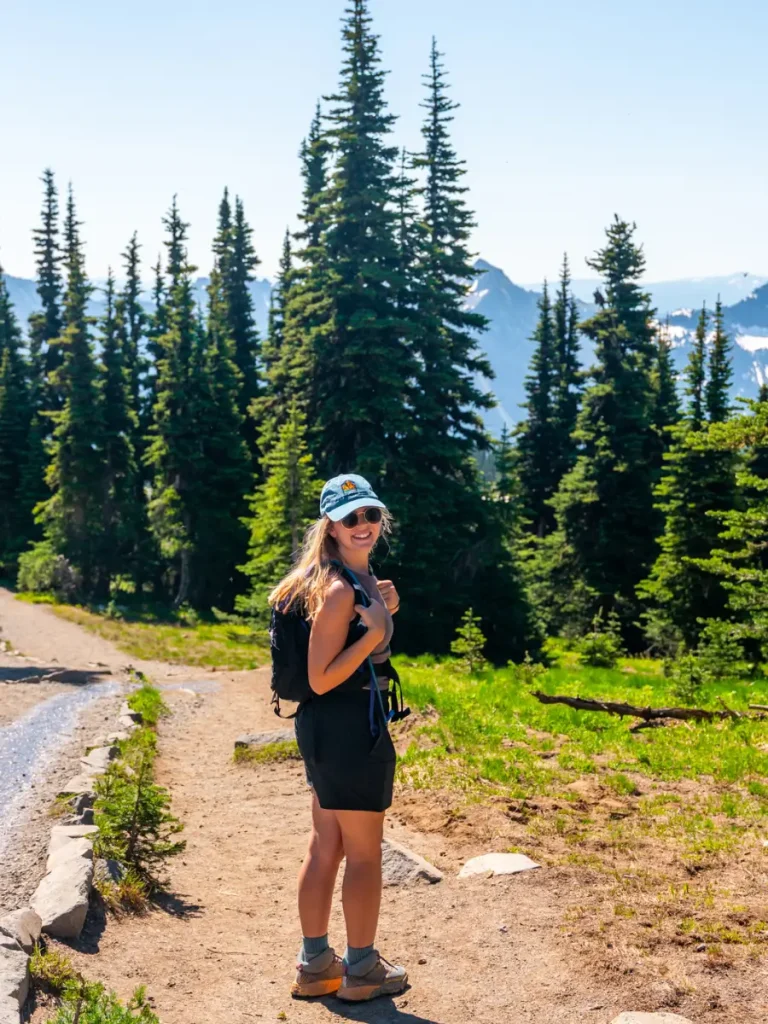
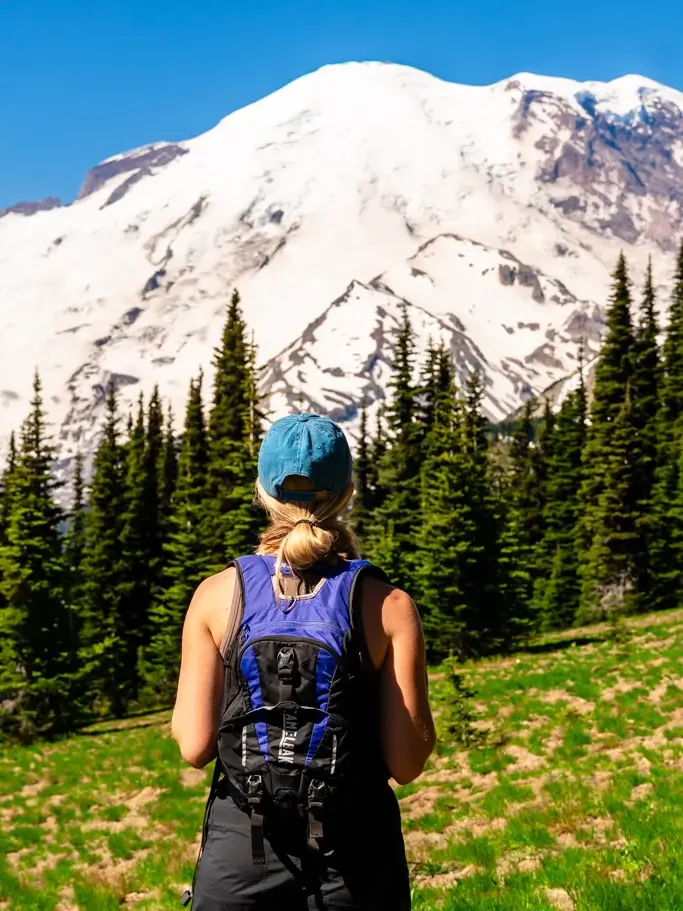
- Sunrise Rim Trail (1.5 miles, 300 ft gain, easy) — A perfect introduction with panoramic views and minimal elevation gain. Great for spotting marmots and chipmunks.
- Mount Fremont Lookout (5.6 miles, 900 ft gain, moderate) — The standout hike of the area. A steady climb through wildflower meadows leads to a historic fire lookout with 360-degree views of the Cascades, including Mount Baker.
- Sourdough Ridge Trail (various distances, moderate) — A fun “choose your own adventure” trail that splits into two routes from the visitor center. Head west toward Frozen Lake (3 miles, 500 ft gain) for a shorter loop, or go east toward Dege Peak (4.2 miles, 800 ft gain) for a more strenuous ridge walk with sweeping views of Mount Baker, Glacier Peak, and Rainier.
- Burroughs Mountain Trail (7+ miles, 1,200 ft gain, strenuous) — Takes you onto the actual slopes of Rainier with close-up glacier views. For experienced hikers only.
- Silver Falls Trail (3 miles, 600 feet, moderate) — A gentle descent through wildflower meadows to a 200-foot waterfall.
- Tipsoo Lake Loop (0.7 miles, 16 feet, easy) — We were looking for a spot to eat lunch (we brought sandwiches) with a nice view, and a ranger directed us here! We parked the car, walked the loop, and then ate lunch with a beautiful view of Mt. Rainier.
Wildlife at Sunrise
If part of your desire to hike Mt. Rainier is wildlife, then Sunrise is an excellent pick, with mountain goats on rocky outcrops, hoary marmots sunbathing near the visitor center, pikas calling from boulder fields, and the occasional black bear in late summer.
Bring binoculars and keep your eyes open, especially early morning and late afternoon, for the best viewing.
Pros and Cons of Sunrise
Pros
- Highest car-accessible point in the park
- Less crowded than Paradise (especially with early arrival)
- Prime wildflower season is absolutely stunning
- Better wildlife viewing opportunities
- Feels wilder and more remote despite easy car access, because of its close proximity to Mt. Rainier
- The trails are a bit more spread out, making it less overwhelming
Cons
- Only open roughly 10–12 weeks a year (July through mid-September)
- Parking fills up extremely fast
- Fewer facilities than Paradise
- Altitude (6,400 ft) can affect some visitors
About Paradise
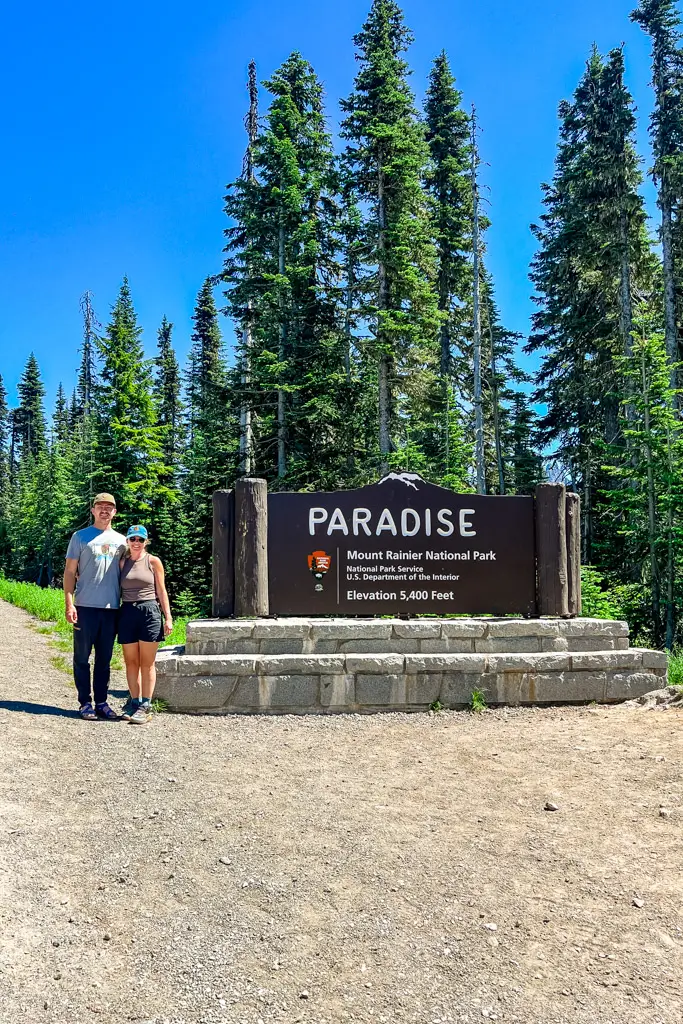
Mount Rainier’s National Park Paradise sits at 5,400 feet and is the more famous, more accessible of the two areas.
It’s open year-round (including winter snowshoeing and cross-country skiing), and it’s where most first-time visitors go.
On a clear summer day, the views of Rainier’s glaciers and the wildflower meadows stretching out below are genuinely postcard-perfect.
The tradeoff when comparing Sunrise or Paradise? Paradise gets crowded.
On busy summer weekends, the parking lot can fill by 9 AM, and the trails feel more like a procession.
That said, the infrastructure is better, with a year-round visitor center, more facilities, easier access for families, and less experienced hikers.
Best Trails at Paradise
- Skyline Trail (5.5 miles, 1,700 ft gain, moderate) — The crown jewel of Paradise, as it has a little something for everyone: glaciers, wildflowers, rivers, waterfalls, and Panorama Point, where on clear days you can see Mount Adams, Mount St. Helens, and even Mount Hood.
- Myrtle Falls Trail (0.8 miles, 100 ft gain, easy) — A paved path to a gorgeous waterfall framed by Rainier. Great for families.
- Nisqually Vista Trail (1.3 miles, 200 ft gain, easy) — Flat, accessible, with big views over the Nisqually Glacier.
- Golden Gate Trail (1.5 miles, 1,000 ft gain, moderate) — A short, steep connector up to the Skyline Trail loop that cuts about 1.5 miles off the full Skyline distance if you want a shorter route.
Don’t Skip Nearby
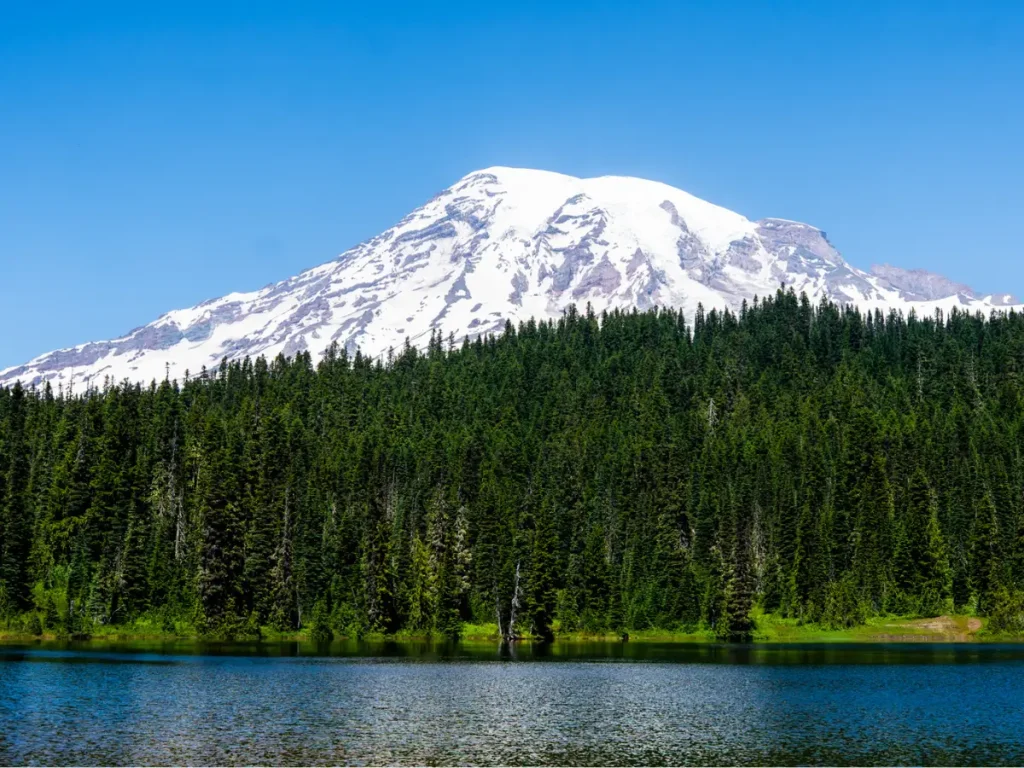
While you’re in the Paradise area, factor in a stop at Reflection Lake (about 10 minutes by car).
On calm mornings before 8 AM, Rainier mirrors perfectly in the water. It’s one of the most stunning photos you can take in the whole park and requires zero hiking.
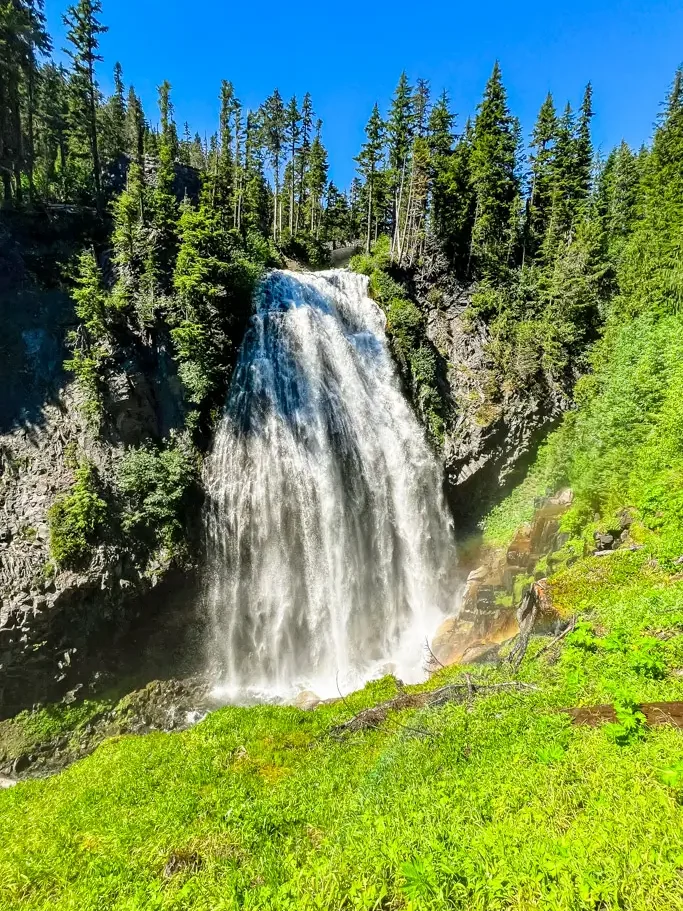
Narada Falls is another easy win, just a five-minute drive from Paradise. A short trail leads to a misty overlook of the 168-foot cascade.
Pros and Cons of Paradise
Pros
- Open year-round, including winter snow activities
- More trails and facilities, better for families
- Longer wildflower season with more variety
- Iconic views that photograph beautifully
- Easy side trips to Reflection Lake and Narada Falls nearby
Cons
- Gets very crowded; parking can fill by 9 AM on weekends
- Trails can feel busy during peak summer months due to the influx of people
- Views feel slightly more distant from the mountain than Sunrise
- Can feel like a “theme park” on busy days due to crowds, which can dampen the wilderness experience
Practical Tips for Visiting Both Areas
Entry: All visitors need a Mount Rainier National Park pass. Consider the America the Beautiful annual pass if you’re hitting other national parks this year.
Book early and plan ahead: White River and Cougar Rock campgrounds open reservations 6 months out, and they go fast. If you’re set on a specific date, don’t wait.
Reservations were required for Sunrise, but the National Park Service has announced that it “will not implement a timed entry reservation for any portion of the park in 2026.”
Note: always check the NPS site before visiting, as policies update seasonally.
Arrive before 7 AM or after 5 PM: This is my BIGGEST piece of advice. Every blog I read said to arrive early, but they were not kidding. We got to Sunrise around 9 am on day one and couldn’t find a parking spot for 45+ minutes. We ended up having to drive to a different trail just to find one, then walk to where we needed to go. Early birds are also rewarded with real sunrise views and trails mostly to yourself for the first couple of hours.
Weekdays are a game-changer: If you have any flexibility, Tuesday through Thursday visits are dramatically less crowded in both areas. Weekend traffic, especially in late July and August, can be brutal, so avoid it if you can.
Layer up no matter the forecast: Mountain weather at this elevation can change quickly. Even on a sunny summer day, temperatures can drop 30+ degrees from afternoon to evening, and afternoon thunderstorms are common in August. Pack a warm layer, a rain shell, and don’t skip the sun protection—UV rays can be especially intense above 6,000 feet. Check out our Pacific Northwest packing list for a more in-depth list.
Download offline maps before you go: Cell service is unreliable throughout the park. Download your trails on AllTrails or grab a paper map at the entrance. Don’t count on GPS saving you mid-hike. Also be sure to bring a backup battery pack. You’re going to take a ton of photos, and that can quickly drain your battery.
Gas: There are no gas stations inside the park. Fill up before you enter, as the closest stations are in Ashford or Packwood on the south side (near the Nisqually entrance to Paradise), or Buckley on the north side (nearest to Sunrise).
Pack your own food and water: The Sunrise Day Lodge has some food options, and Paradise has a café, but both get busy, and options are limited. Packing your own lunch means you can eat wherever the views are best and avoid the midday rush at the only food counter available for miles. Hydration is especially important at high altitudes, as it can help relieve altitude sickness and help you refuel during a hike.
Stay on the trails: Alpine plants grow incredibly slowly and are easily damaged. With wildflower meadows this beautiful, the temptation to wander off-trail for a photo is understandable, but please don’t. Stick to designated paths and use existing viewpoints to help preserve the National Park.
Check conditions before you go: Road closures, trail conditions, and reservation updates happen regularly. Check the Mount Rainier National Park website and road conditions before heading out, especially early or late in the season.
For help planning an itinerary for Mount Rainier, check out our 2-day plan and comprehensive hiking guide that’ll walk you through everything you need to know about tackling Sunrise and Paradise in a 48-hour trip.
Where to Stay Near Mt. Rainier
Near Sunrise
There’s no overnight lodging at Sunrise itself, but several solid options are within easy striking distance:
- White River Campground (5 miles from Sunrise) — 112 sites, first-come, first-served, open July through September. Basic facilities with vault toilets, ideal for early-morning Sunrise access.
- Crystal Mountain Resort (about 30 minutes) — Hotel rooms and vacation rentals with a restaurant, plus summer chairlift rides for extra views.
- Enumclaw/Greenwater area (45–60 minutes) — Various motels and B&Bs, more dining options, and a good base if you’re doing multiple park visits.
- Silver Springs Campground (Crystal Mountain area, ~30 minutes) — Private campground with full hookups, showers, and a camp store.
Near Paradise
Paradise has the best in-park lodging options of the two areas:
- Paradise Inn — The ultimate park stay, right at the visitor center at 5,420 feet. Open mid-May through early October. Historic, atmospheric, and books up months in advance for summer dates — reserve early.
- National Park Inn at Longmire — A good alternative if Paradise Inn is full or you’re visiting outside its season. Open year-round, located about 20 minutes from Paradise in the Longmire area of the park.
- Cougar Rock Campground (about 10 miles from Paradise) — Reservations available, open May through September. The nearest camping option to Paradise.
- Ashford and Packwood — The closest towns outside the Nisqually entrance, with a range of cabins, vacation rentals, and budget motels.
Sunrise or Paradise: Which Should You Visit?
Choose Sunrise if:
- You’re visiting between mid-July and early September
- You want a wilder, less crowded experience
- Hiking is your priority
- You love wildflowers, alpine scenery, or epic panoramic views
- You’re an early riser and willing to arrive before 7 AM
Choose Paradise if:
- You’re visiting outside of July–September (or it’s your only option seasonally)
- You’re traveling with kids or less experienced hikers
- You want more facilities and a longer window of access
- You’re visiting in winter for snow activities
- You prefer a classic alpine Mt. Rainier experience
If you only have one day: Sunrise edges it out during peak season for the intimacy and drama of the alpine environment. But Paradise is never a bad choice; it earned its name for a reason after all.
If you have two days: Do both. Spend Day 1 at Sunrise for the early light and alpine trails, then head to Paradise on Day 2 for the Skyline Trail loop, Myrtle Falls, and a stop at Reflection Lake on your way out. Sunrise is the more rugged adventure, so it’s best to do it first while you have 100% energy.
Final Thoughts
Whether you end up at Sunrise, Paradise, or both, Mount Rainier is an exceptional experience for those who are madly in love with the outdoors.
The mountain has a way of making every visit feel worth the early alarm, even if you aren’t an early riser.
Ready to plan your Mount Rainier adventure? Remember to check current road conditions, layer up, download an offline map, pack food and water, head in early (or late), and get ready for one of the most awe-inspiring experiences the US has to offer!
Mount Rainier is just one highlight of the spectacular Pacific Northwest. If you’re planning a bigger adventure in the region, be sure to check out our 1-week Pacific Northwest road trip itinerary, which includes Mount Rainier, Olympic National Park, the Oregon Coast, and other epic stops.
FAQs
Is Paradise or Sunrise closer to Seattle?
Sunrise is closer to Seattle, on the mountain’s northeast side, so it’s a shorter ride of about 100 miles (about 2 hours to 2 hours 15 minutes), usually via SR-410 E through Enumclaw.
Paradise is farther from Seattle, being on the southside of the moutain, about 106-116 miles (roughly 2.5 hours) via I-5, WA-410 E, and WA-167 S.