
10 Days in China: The Perfect First-Time Itinerary

The Mobile Homie contains affiliate links and is a participant in the Amazon Services LLC Associates Program, as well as other affiliate programs. If you click on a link or make a purchase through one of these links, we may earn a small commission at no extra cost to you. For more details, see our Privacy Policy.
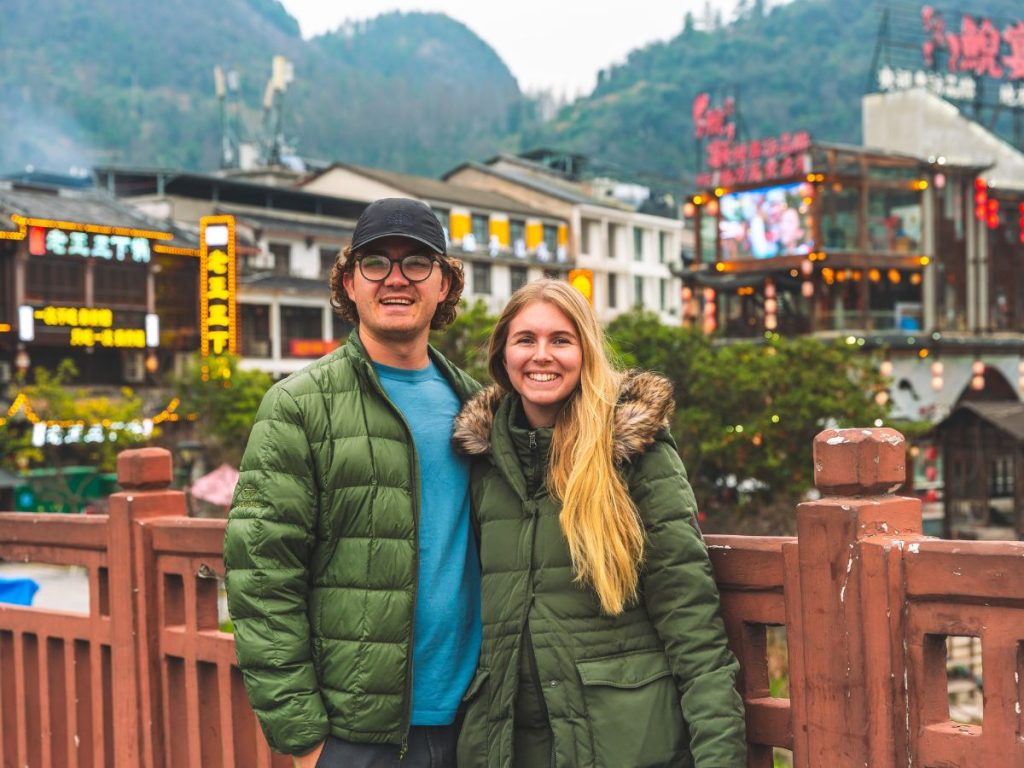
Let’s be honest…China feels like a lot to plan. The scale, the language barrier, the firewall, the payment apps, the sheer number of things to see. Before JT and I went to China in February 2026, I had done so much research on visiting China, but nothing I found helped me feel like I could string it all into one cohesive trip.
So after our trip went surprisingly well, I decided that I needed to put our experience into a cohesive itinerary because it was the most perfect trip to China for first timers (like us)! We followed this route ourselves, and while a few things went sideways (we may or may not have missed a train haha), the bones of this plan are solid!
This 10-day China itinerary covers four destinations: Shanghai, Zhangjiajie, Xi’an, and Beijing. It’s designed specifically for first-timers who want to hit the highlights without burning out, and it’s structured around a logical city order that keeps travel time efficient.
So if you’ve been Googling ‘China itinerary’ for the past month and still feel overwhelmed, you’re in the right place. Let’s break it down!
Why This 10-Day China Itinerary Works
Most first-time visitors make one of two mistakes: they try to cram in too many cities, or they linger somewhere for too long and miss something iconic. This itinerary is right in the middle! Of course, there were some cities where we would’ve liked to stay longer, but it still gave us a great sample, so we know where we want to go back to.
It’s also built around practical realities that a lot of itineraries skip over, like how the 240-hour visa-free transit actually works in practice, which cities connect by high-speed train, and where to stay as a first-timer who wants easy access to sights without the headache.
Plus, if any of it ever feels like to much, cut out a city, switch out a city, whatever you want! This is your itinerary, but using this itinerary as a guide will work well for you!
240-Hour Visa-Free Transit for Americans (How the Countdown Works)
Americans currently qualify for China’s 240-hour (10-day) visa-free transit policy when entering through designated ports and exiting to a third country or region. This is what made our trip possible without a full tourist visa (which is super costly). If you’re unsure if your country is on the list of China’s visa free countries, you can check HERE.
Even though it seems odd, the clock does NOT start when you pass through immigration at your entry port. The clock for the 240 hour visa-free transit actually starts that night at midnight. That means, even if you arrive at 6AM, your timer does not start for another 18 hours.
Now, there are some other stipulations like you must enter and exit through qualifying airports (Shanghai Pudong, Beijing Capital, and pretty much all other major airports are included), and you need to have a confirmed onward ticket to a third destination. But don’t worry!
Basically, that means that in order to be eligible, your flight path needs to look like this: Country A -> Country B (Mainland China) -> Country C (must be different from Country A). Also, for the purposes of this visa-free transit, Hong Kong, Taiwan, and Macao all count as eligible countries to fly to/from.
For our flight path, we flew from SFO (San Francisco, CA, USA) to PVG (Shanghai Pudong, Mainland China), PEK (Beijing, Mainland China) to TPE (Taipei, Taiwan), and then TPE (Taipei) to PHX (Phoenix, AZ, USA).
For the full breakdown of rules, qualifying ports, and edge cases, check out our detailed guide: How the 240-Hour China Transit Visa Works (2026 Guide) (coming soon).
Best Time of Year to Follow This Route
Spring (April to May) and autumn (September to October) are the sweet spots. The weather is mild across all four cities, and crowds are more manageable than the summer peak.
We went in February, which put us right in the middle of Chinese New Year, a fascinating but hectic time to be in China, particularly in Shanghai. The energy was incredible, but some sights were mobbed with crowds and a few things were closed. We knew this going in (we wanted to be there for Lunar New Year), but I don’t think we would ever go back at that time.
From what we’ve read, summer (June to August) is hot, humid, and crowded. Winter is cold but workable, especially if you want to get the New Year experience! If you decide to go for Lunar New Year or Golden Week in early October, if crowds stress you out, I would advise against going.
10-Day China Itinerary Overview
Day-by-Day Breakdown at a Glance
| Day(s) | City | Main Focus |
| Days 1-2 | Shanghai | Arrive, explore the Bund, Pudong, local neighborhoods |
| Day 3 | Travel to Zhangjiajie | Travel from Shanghai, check into Wulingyuan |
| Days 4-6 | Zhangjiajie National Forest Park | Avatar Mountains, Tianmen, trails and viewpoints |
| Day 7 | Travel to Xi’an | Morning train/flight, evening in the Muslim Quarter |
| Day 8 | Xi’an | Terracotta Warriors, City Wall, street food |
| Day 9 | Travel to Beijing (at night) | Night train or evening flight |
| Day 10 | Beijing | Great Wall, Forbidden City, hutong walk |
| Day 11 | Depart Beijing | Airport transfer, check visa window |
Days 1-2: Arrive in Shanghai and Explore the City
For us, Shanghai was the perfect entry point. It’s modern, well-connected, and just international enough that the learning curve doesn’t smack you in the face on day one. It’s also where you’ll start figuring out the apps and payment systems you’ll use for the rest of the trip, so better to sort that out here than in a smaller city!
Getting From the Airport to Central Shanghai
If you land at Pudong International Airport (PVG), you have a few options to get to the city center. Taxis and Didi are both reliable for the full airport-to-hotel run if you have luggage and don’t want to deal with public transit.
Best Areas to Stay in Shanghai
For first-timers, the French Concession or Jing’an neighborhoods have the right balance: central, walkable, and packed with good restaurants, cafes, and nightlife. Pudong has fancier hotels with Bund views but requires a river crossing to reach most sights. Personally, I would also avoid staying too far from a metro.
For a deeper look at neighborhoods and specific hotel picks: Where to Stay in Shanghai for First Time Visitors (coming soon)
Top 3 Hotels in Shanghai
The Peninsula Shanghai ⭐⭐⭐⭐⭐ Rating 9.4
The Ritz-Carlton Shanghai Pudong ⭐⭐⭐⭐⭐ Rating 9.4
Fairmont Peace Hotel ⭐⭐⭐⭐⭐ Rating 9.6
Neighborhoods and Streets to Eat in Shanghai
Wujiang Road is a classic snack street near Jing’an Temple. Yongkang Road is great for a casual evening with drinks and small bites. For something more local, head to Yunnan South Road for street-level Shanghai classics like xiaolongbao and shengjianbao.
Fair warning: we loved trying everything but nothing we ate in China ever had us completely in love. It was all good, just not the “revelation” we expected.
Top Things to Do in Shanghai
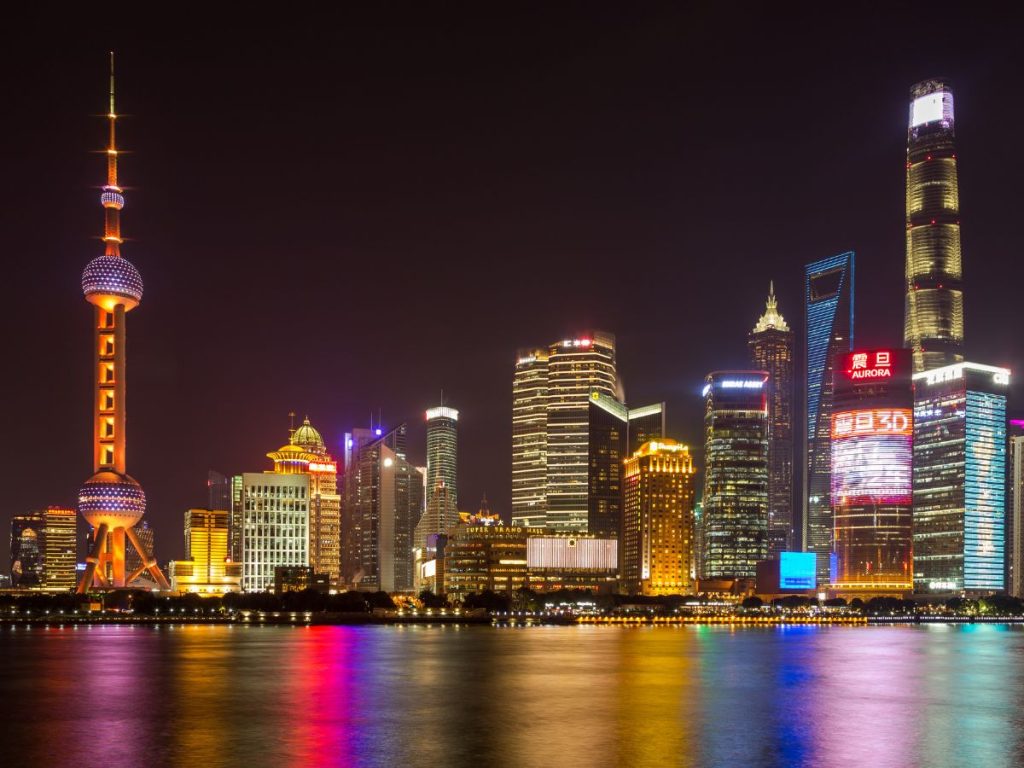
- Walk the Bund at dusk and stay for the Pudong skyline light show
- Explore Tianzifang, a maze of art studios, cafes, and boutiques in Luwan
- Take the ferry across the Huangpu River (it’s cheap and the views are great)
- Visit Xintiandi for a look at the shikumen architecture blend with modern design
- Wander Yu Garden and the surrounding bazaar area
P.S. You can find a whole list of our favorite things to do in Shanghai in our post Best Things to Do in Shanghai (coming soon).
Day 3: Travel From Shanghai to Zhangjiajie
There’s no direct train between Shanghai and Zhangjiajie, so a flight is your “easiest option”. Direct flights run about 2.5 to 3 hours, and if you book early enough, they’re not too expensive. We ended up taking a train because of the cost and it was totally fine!
Just know going in that the train stations in China have security and boarding gates, just like an airport. Either way, aim for a morning departure so that you arrive with daylight left to get settled in Wulingyuan.
How to Get From Zhangjiajie Airport to Zhangjiajie National Forest Park
Zhangjiajie Airport (DYG) is about 20 miles from Wulingyuan, the town closest to the national park (where you will probably want to stay). A Didi or taxi from the airport takes 45 to 60 minutes and costs roughly 100 to 150 CNY. There are also shuttle buses, but for a first-timer with luggage, the private ride is worth it (I think it was under $10 USD for us).
Best Areas to Stay Near Zhangjiajie National Forest Park (We Suggest Wulingyuan)
If you are going here to visit Zhangjiajie National Park, stay in Wulingyuan, not Zhangjiajie city. We were a bit unclear on this before we went, but they’re about 20 miles apart, and Zhangjiajie city has nothing to offer in terms of park access (the city is pretty cool though).
Wulingyuan is right at the park entrance, which saves you commuting time every morning and means you are close to a lot of shops and restaurants when you’re done!
More options: Where to Stay in Zhangjiajie and Wulingyuan for the National Park (coming soon)
Top 3 Hotels in Wulingyuan
Pullman Zhangjiajie Hotel ⭐⭐⭐⭐⭐ Rating 8.8
Celestial Valley ⭐⭐⭐⭐ Rating 9.8
No.5 Valley Lodge ⭐⭐⭐⭐⭐ Rating 9.4
Evening Ideas in Wulingyuan
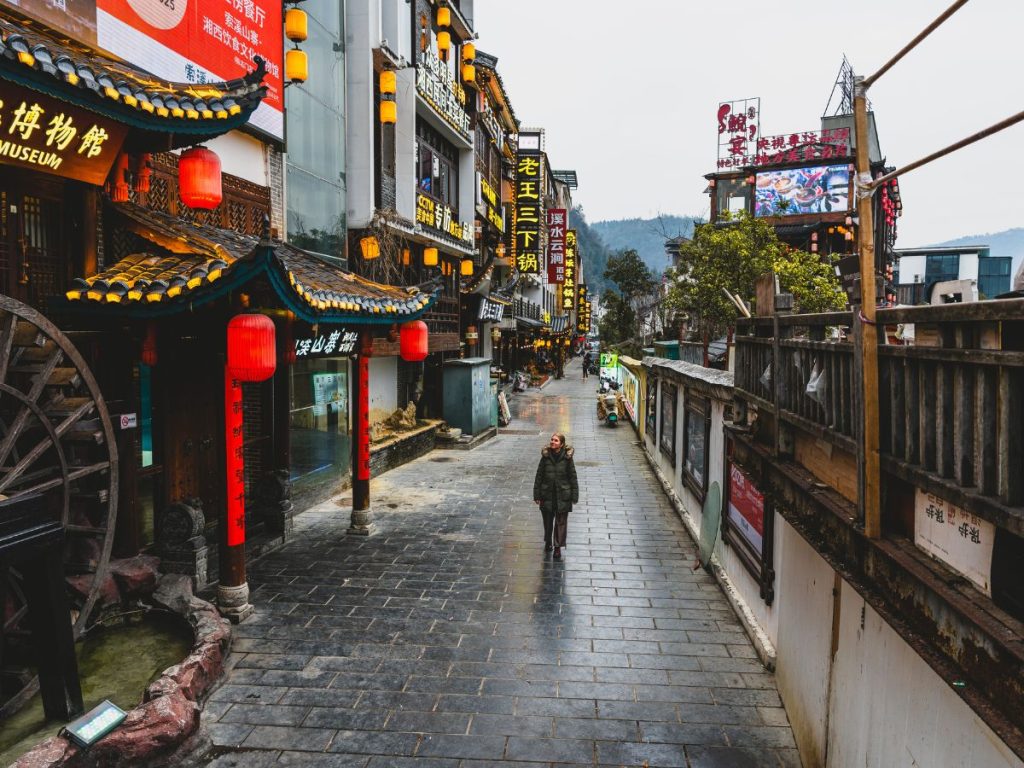
We found that Wulingyuan has a decent main street with local restaurants and shops. Nothing fancy, but a solid first evening! It’s also a good time to grab your park entrance ticket or check the logistics for the next morning.
Days 4-6: Zhangjiajie National Forest Park
Honestly, the nature of Zhangjiajie is unreal. We knew it was supposed to be cool, it’s literally the inspiration for the floating mountains in Avatar, but standing at the first real viewpoint stopped us both mid-sentence. It’s one of those places where photos don’t come close to doing it justice.
One thing I will say, since we visited during Lunar New Year, it was packed and the crowds definitely took away from the experience. So just make sure that you try to avoid key times to visit or consider going the opposite way through the park.

How to Enter and Get Around Zhangjiajie National Forest Park
The main park entrance is Wulingyuan Scenic Area. A 4-day entrance ticket costs around 245 CNY and is worth getting even if you’re only there for 2.5 days (because it comes with unlimited cable car/bus access).
Inside the park, cable cars, an elevator (the Bailong Elevator, the world’s tallest outdoor lift), and loop buses get you between the major zones. The park is HUGE, so just know that you are not going to walk everything.
Must-See Viewpoints and Trails in Zhangjiajie
- Yuanjiajie Scenic Area, the best spot for the Avatar-style pillar views
- Tianzi Mountain: sweeping panoramas across the whole park
- Golden Whip Stream, a flat, easy walk along the valley floor through towering formations
- Bailong Elevator: take it at least once; the views from the glass cabin are absurd
- Tianmen Mountain and the Glass Walkway, technically outside the national park, but worth the half-day
Also on the adventure side: if you have the nerve, Climbing Qixing Mountain Via Ferrata (coming soon) covers one of the most extreme experiences in the region.
If you’re staying in Wulingyuan, we would suggest entering through the East entrance and doing a loop through the park to exit in the same spot. Alternatively, you can enter from the Southern entrance and do a one way across the park. You can always ask your hotel reception for their suggestions!
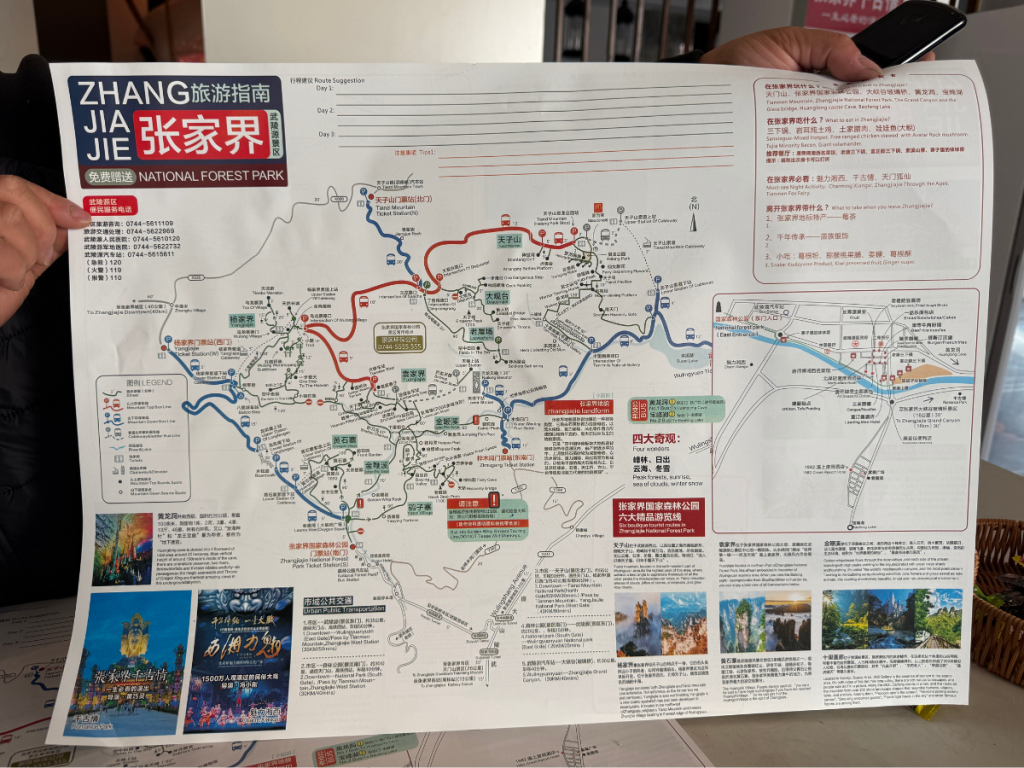
For a full-day breakdown, check out our post 3 Day Zhangjiajie Itinerary: Avatar Mountains and National Park (coming soon)
And for the big question…Are the Avatar Mountains in China Worth Visiting? (coming soon)
Where to Eat Around Wulingyuan and the Park
Most restaurants in Wulingyuan cater to Chinese domestic tourists, so menus are often in Mandarin only. Pointing and ordering works fine with photos on the wall, and the staff are generally patient with foreigners. If you visit any of the western restaurants (like KFC), they have an english menu at the counter!
Day 7: Morning Travel From Zhangjiajie to Xi’an
How to Get From Zhangjiajie to Xi’an
This leg of the trip deserves a special mention because…we missed our train from Zhangjiajie to Xi’an. We left the hotel in plenty of time, but Zhangjiajie West Station is large and confusing (more like an airport), and we definitely underestimated it. So if you learn anything from us, get to the train station at least 90 minutes early, more if it’s your first time in a Chinese train station!
High-speed trains run from Zhangjiajie West to Xi’an North with one transfer, usually in Changsha or Chengdu. The total travel time is around 6 to 8 hours depending on the connection. Flights are also available but don’t save much time once you factor in airport transfers. We ended up on a later train and arrived in Xi’an in the evening, which honestly worked out fine!
Another note here, if you don’t have a Chinese phone number, you’re going to want to purchase your tickets using Trip.com (it’s the only way to purchase besides 12306 where you need a Chinese phone number).
Best Areas to Stay in Xi’an
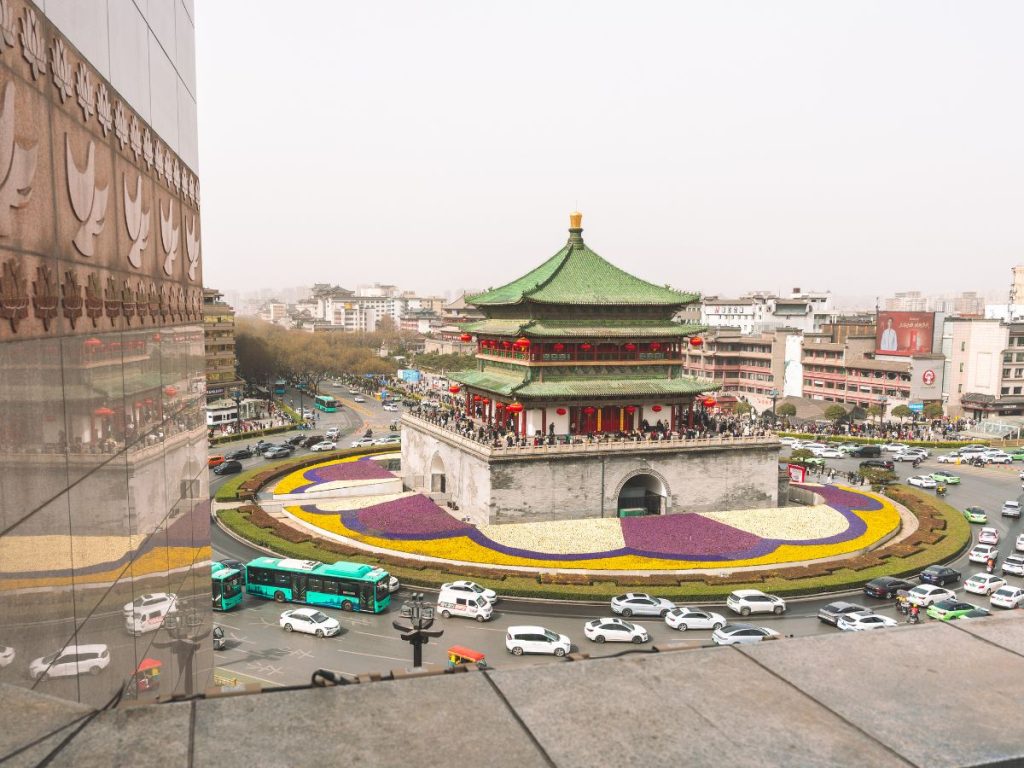
We would recommend staying inside or just outside the old city walls, ideally near the Bell Tower or the Muslim Quarter. This keeps you walkable to most of the central attractions and puts you right in the middle of the food scene!
Top 3 Hotels in Xi’an
The Ritz-Carlton Xi’an ⭐⭐⭐⭐⭐ Rating 9.8
Sofitel Legend People’s Grand Hotel Xi’an ⭐⭐⭐⭐⭐ Rating 9.3
Gran Meliá Xi’an ⭐⭐⭐⭐⭐ Rating 9.4
If you want more details, we have a 2 Day Xi’an Itinerary: Terracotta Army and City Highlights (coming soon).
How to Spend an Evening in Xi’an
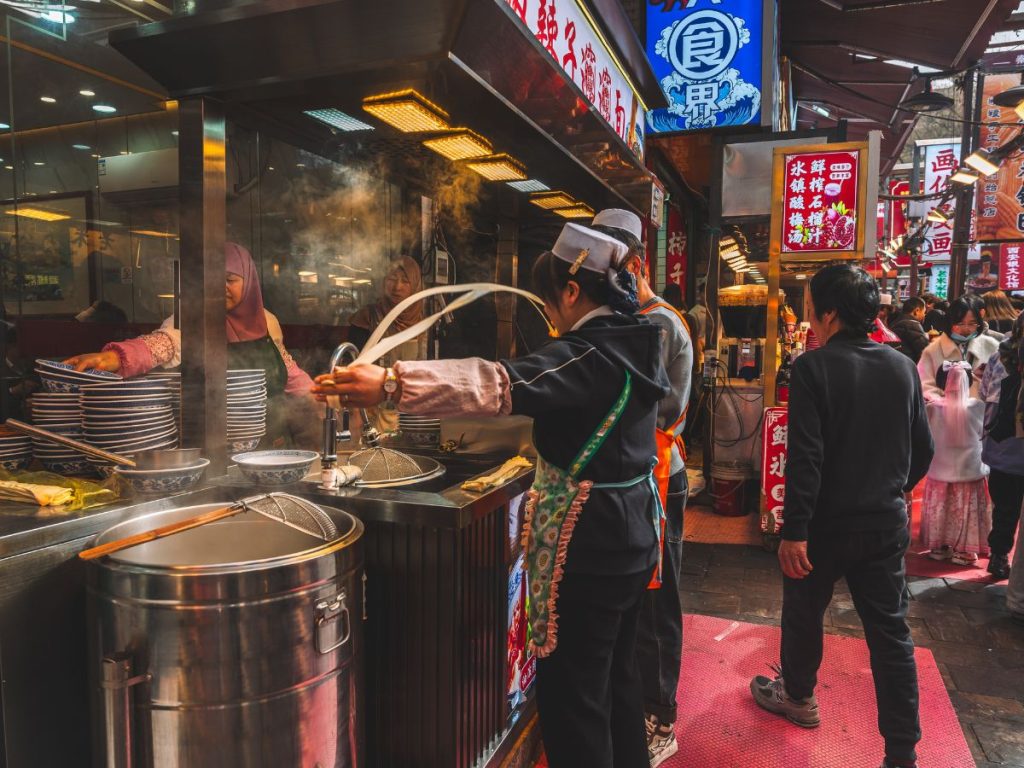
Once you get settled at your hotel, head straight to the Muslim Quarter! It’s loud, fragrant, chaotic, and honestly, fantastic. For food, you can find rou jia mo (Chinese burgers), lamb skewers, pomegranate juice, and biangbiang noodles everywhere!
Make sure to walk the lit-up alleys and grab a cold beer from a street vendor. This is one of those evenings that just sort of happens perfectly without you planning it.
Day 8: Explore Xi’an
Visiting the Terracotta Warriors in One Day
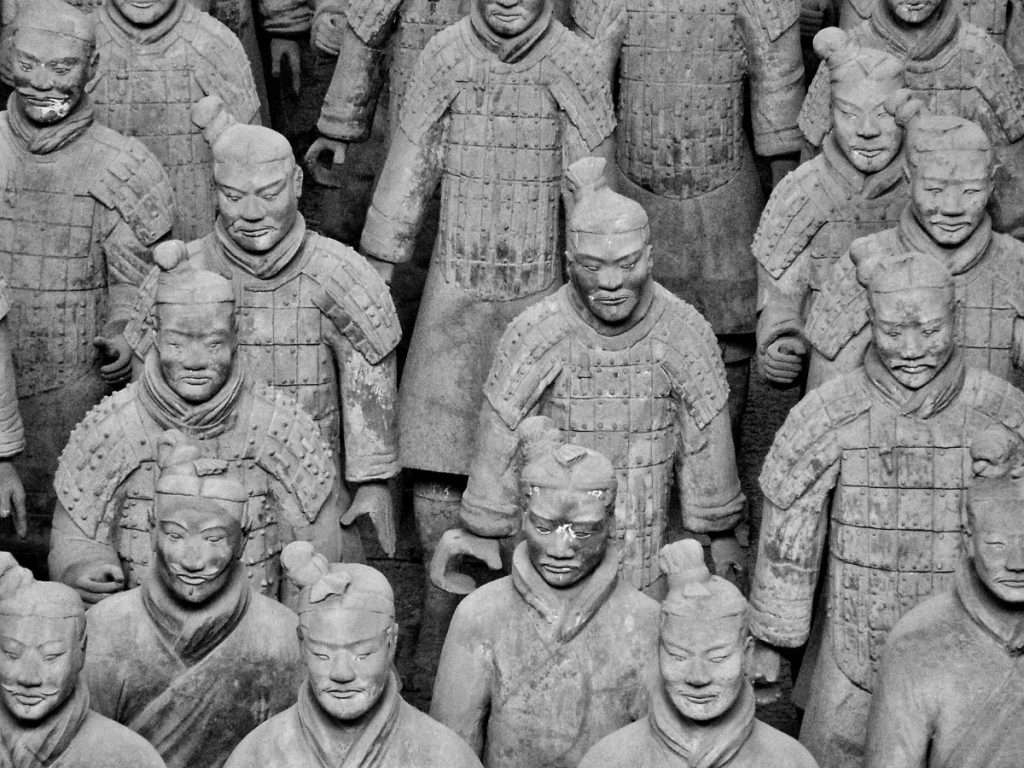
Even though Xi’an is known for it, the Terracotta Army is actually about 18 miles east of the city center. The two most popular ways to get there is by either taking public transit, or taking a tour.
Either way, the best advice we can give is to go early. By late morning it gets packed, and Pit 1 especially becomes hard to see clearly. We would definitely recommend to book tickets online in advance, or even booking a private tour (especially if you want to see the warriors up close)!
Exploring the Xi’an City Wall
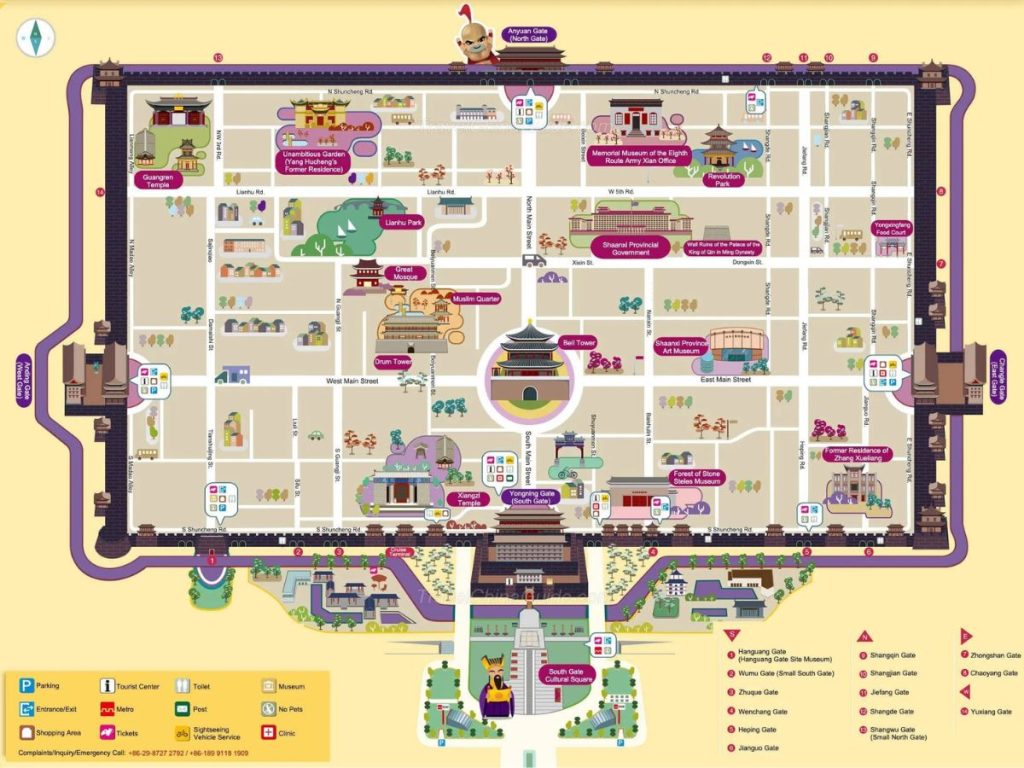
After getting back from the Warriors, definitely make sure to rent a bike on top of the City Wall for a couple of hours. The full loop is 9 miles and totally doable in 90 minutes at an easy pace! The views into the city below and out toward the surrounding area are great, and it’s one of the better preserved ancient walls in China.
Bike rentals are available at the West, South, and East gates (on top of the wall). We found this map really helpful!
Where to Eat in Xi’an
The Muslim Quarter is the best for street food, for sit-down meals, the area around the Bell Tower has plenty of Xi’an noodle houses with English menus!
We spent a lot of time researching restaurants in Xi’an and were very happy with a western option that we decided to try: Isola del Nord Italy Restaurant.
Day 9: Travel From Xi’an to Beijing
How to Get From Xi’an to Beijing
The high-speed train from Xi’an North to Beijing West takes about 4.5 hours and is, genuinely, one of the smoothest travel experiences you can have! The seats are comfortable, there’s a dining car, and it drops you right in the city. Your other option is to fly. We would recommend looking at prices and seeing which is the more affordable route.
An evening departure from Xi’an gets you into Beijing late, so you can check in and be ready to go first thing the next morning for your final day. A morning departure also works if you want a full afternoon in Beijing before the Great Wall day (this is what we did).
Best Areas to Stay in Beijing
Dongcheng District puts you close to the Forbidden City, the hutong neighborhoods, and Wangfujing Street. Staying near a metro line with access to the main sights is definitely the priority! The area around Qianmen or Nanluoguxiang is good for the atmosphere, but we would avoid staying way out in the business districts (otherwise you’ll waste half your day commuting).
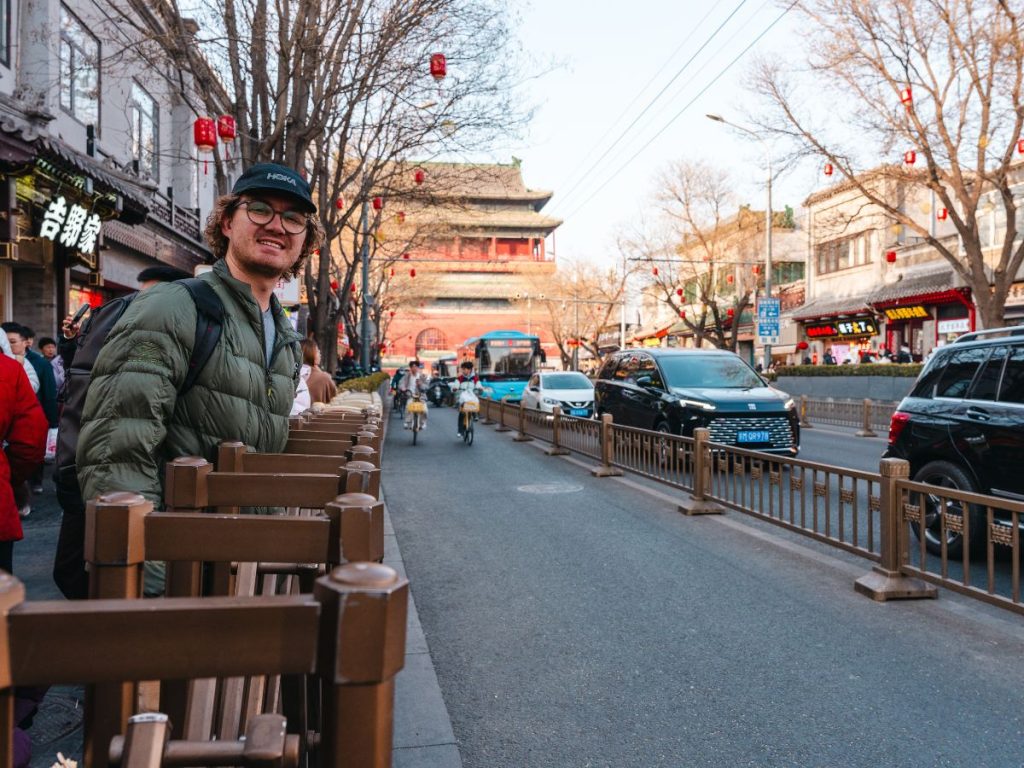
Top 3 Hotels in Beijing
Waldorf Astoria Beijing ⭐⭐⭐⭐⭐ Rating 9.5
The Peninsula Beijing ⭐⭐⭐⭐⭐ Rating 9.6
Rosewood Beijing ⭐⭐⭐⭐⭐ Rating 9.4
Day 10: The Great Wall of China
This is your one full day in/near Beijing, so let’s make it count. The Great Wall is obviously the headline, but you will have some more time to explore Beijing when you get back.
Choosing Which Great Wall Section to Visit
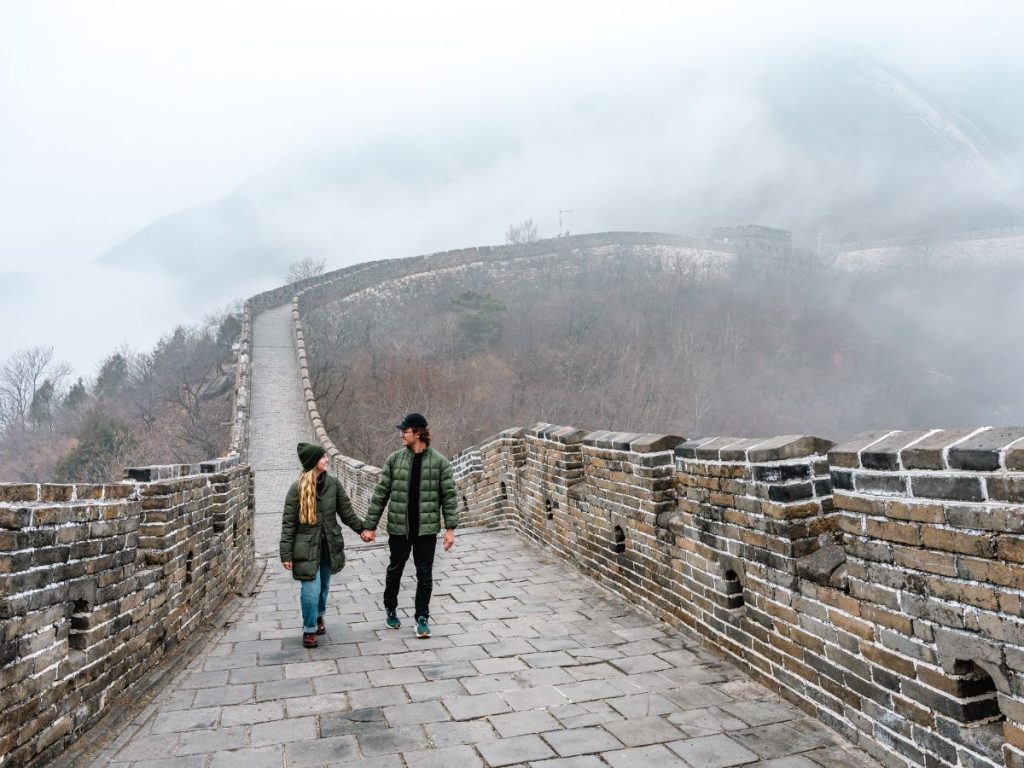
For first-timers with limited time, Mutianyu is the best choice: it’s well-restored, accessible, less crowded than Badaling, and has a cable car option if you don’t want to hike up. Badaling is the most famous section but gets extremely busy, especially on weekends. Jinshanling is beautiful and more rugged but takes longer to reach.
We ended up hiring a private driver to take us SUPER early to the Mutianyu section, and we had the wall completely to ourselves for the better part of an hour!
Full comparison: Best Way to See the Great Wall of China (Tours vs DIY) (coming soon)
How to Get to the Great Wall From Beijing
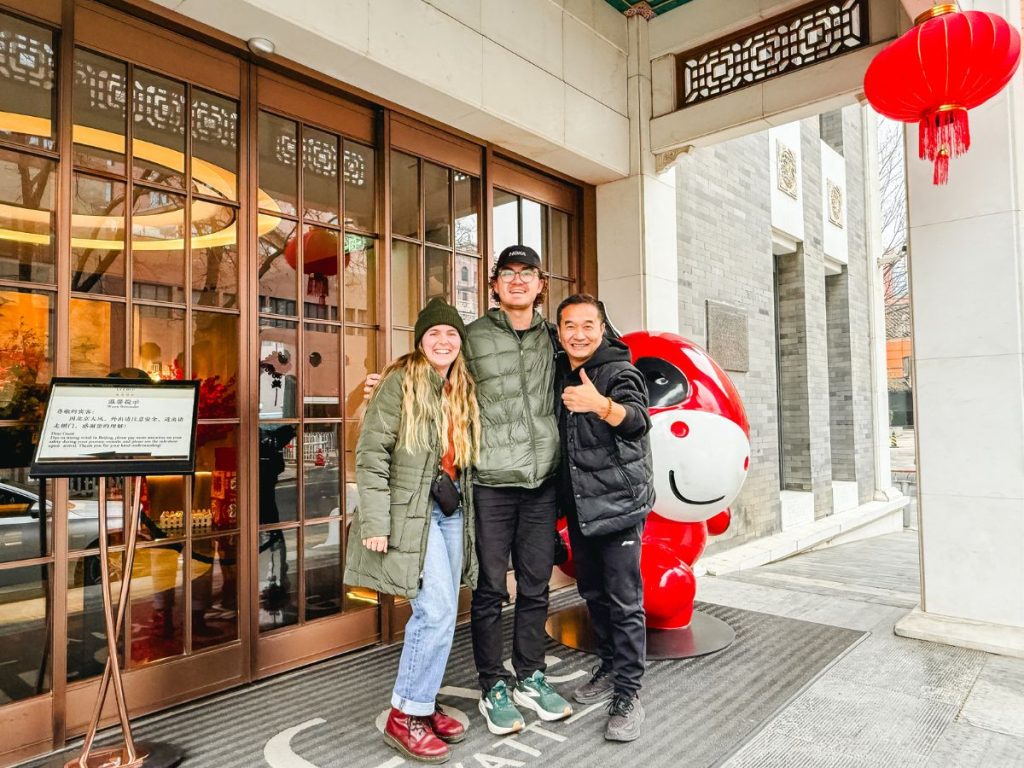
For Mutianyu, there are a bunch of options ( a hired car, group tour, or public bus), but we would highly recommend hiring a driver. Our driver picked us up straight from the hotel at 6 am, drove us to the entrance, told us about the history of the area, and helped us obtain tickets.
We didn’t have to do much, plus he spoke to us in english (but spoke to everyone else in Mandarin), so it was completely hassle free! If you want to book the same tour as us, you can here.
Other Things to Do in Beijing With Limited Time
- Forbidden City: even if you only walk through the main area, the scale is incredible (book in advance)
- Tiananmen Square: five minutes from the Forbidden City, historically significant and worth a look
- Hutong walk around Nanluoguxiang: the best preserved traditional alley neighborhood
- Temple of Heaven: great for an evening stroll if you have time after the Wall (you should if you hire a driver)
- Explore the Olympic Facilities (this was actually one of our favorite stops)
Neighborhoods and Areas to Eat in Beijing
Guijie (Ghost Street) on Dongzhimennei Dajie is famous for late-night crayfish and spicy hotpot. The Nanluoguxiang area has a mix of local restaurants and creative cafes. For Peking duck, Da Dong or Quanjude are the classic names, just make sure to reserve a table in advance!
We also ended up trying Mr. Shi’s Dumplings (based off of someone’s recommendation), and we ended up loving it!

Day 11: Departure From Beijing
Getting to the Airport From Central Beijing
Beijing Capital International Airport (PEK) is connected to the city via the Airport Express train from Dongzhimen station. It runs every 10 minutes and takes about 20 minutes. The newer Beijing Daxing Airport (PKX) requires a different line (Daxing Airport Express), so confirm which airport your flight departs from.
Honestly, we ended up taking a DiDi because our flight was fairly early and the transit was not open yet, and that worked out fine for us!
As a reminder, if you are visiting on the 240 hour visa-free transit policy, just make sure that you are leaving well within your window. It’s not worth it to accidentally over stay.
Also worth reading before you go: Visiting China as an American: What You Need to Know (coming soon)
How to Get Around in China
Didi
Didi is the Chinese equivalent of Uber, and it works through WeChat (make sure to set this up before you go to China). We used it for almost every ride…for airports, hotels, restaurants, you name it! We found all of the pricing to be rather inexpensive (as americans).
Flights
For this itinerary, you could probably get away with only flying in/out of China, but definitely make sure to compare flight and train prices. Typically, domestic flights in China are reasonably priced when booked in advance, but when we went during Lunar New Year, it was impossible to find anything reasonably priced.
Trains
Overall, we fount that the high-speed rail network is excellent! Xi’an to Beijing and the Zhangjiajie connections are all manageable with some planning! One important thing: Chinese train stations are the size of airports. Plan to arrive 60 to 90 minutes before departure, and don’t underestimate the walk from the entrance to the platform! We made that mistake and paid for it (oops!).
How to Book Trains in China
We found that Trip.com is hands down the easiest for English-speaking travelers. It has an English interface, accepts international credit cards, and shows real-time availability. The official China Railway 12306 app is cheaper with no service fee but requires a Chinese phone number to set up.
Alternatively, you can always book your tickets at the counter, just know, you will probably need to use google translate to communicate.

What to Prepare Before Your Trip
Before you actually arrive in China, there are a few things that you need to setup before hand. For most of these items, you will need to do it before hand because you will need access to your non-Chinese phone number, plus identity verification. Here’s what you need to set up:
- AliPay/WeChat
- Add multiple credit/debit cards to each
- Didi (it’s own app or through WeChat)
- Download Amap (Google Map Alternative)
- Download Trip.com (to purchase train tickets and activities)
- Download an eSIM so that you can access western apps!
P.S. We used this eSIM from Trip.com, and surprisingly, it worked seamlessly for the whole trip (& it was super affordable)!
Final Tips for First-Time Travelers to China
Cultural Etiquette and Practical Tips
Here are some things that really shocked us about our trip:
- You will use AliPay/WeChat to pay for everything. Even in the smallest markets, people will have a lanyard with their Alipay QR code. We would still recommend having a small amount of cash in case of emergencies.
- Talking loudly in public is common and fine.
- Tipping is not customary (except we did tip our guide/driver).
- “Queue culture” exists. Trust us. This is something we had to look up because we were so baffled by this! If you are in line for anything, just be prepared to get cut unless you are standing no more than an inch away from the person in front of you.
- Even if a lot of locals don’t speak english, everyone was super welcoming and willing to help! Don’t be afraid to use your translation app to communicate!
Language Tips and Getting Around Without Mandarin
We spoke zero Mandarin and got through 10 days just fine! Google Translate’s camera function is your best tool for menus and signs. When in doubt, point!
Just know, some of the “mini-apps” in AliPay/WeChat don’t have a translation feature, so sometimes you might need to resort to using your partners camera translation function.
We used an eSIM the entire trip to keep access to Western apps including Google Maps, Instagram, and WhatsApp. It worked seamlessly and we’d do it the same way again.
Ready to Book?
Ten days will never be enough to see four of China’s most compelling destinations, but its a great place to start. For us, this trip was to see if going deeper into China’s culture (and going through the process of getting a Chinese visa) was something that we were interested in. After our amazing trip following this itinerary, I think it’s safe to say that we are!
This itinerary was created to maximize the 240 hour visa-free transit policy as much as possible, it and does just that, but just know you’ll go home wanting more!
If you’re still filling in the details of your trip, we’ve got dedicated guides for every leg of this itinerary (or at least we will soon)! Here’s what you can expect to find:
- Visa logistics: How the 240-Hour China Transit Visa Works (2026 Guide) (coming soon)
- Payments: How to Pay in China as a Foreigner (Alipay & WeChat Pay) (coming soon)
- Shanghai deep dive: 3 Day Shanghai Itinerary for First Time Visitors (coming soon)
- Zhangjiajie deep dive: 3 Day Zhangjiajie Itinerary: Avatar Mountains and National Park (coming soon)
- Xi’an deep dive: 2 Day Xi’an Itinerary: Terracotta Army and City Highlights (coming soon)
- Great Wall: Best Way to See the Great Wall of China (Tours vs DIY) (coming soon)
If you have any specific questions, make sure to leave them below!






Missing the Zhangjiajie–Xi’an train despite leaving the hotel in good time is the warning first-timers need. Chinese high-speed rail is easy once inside, but the stations behave more like airports and “West” or “North” is not a decorative part of the station name.
Ninety minutes is a fair first-trip buffer. I would also save the Chinese station name, carry the passport used for the booking, and check the exact entrance before calling the DiDi.